
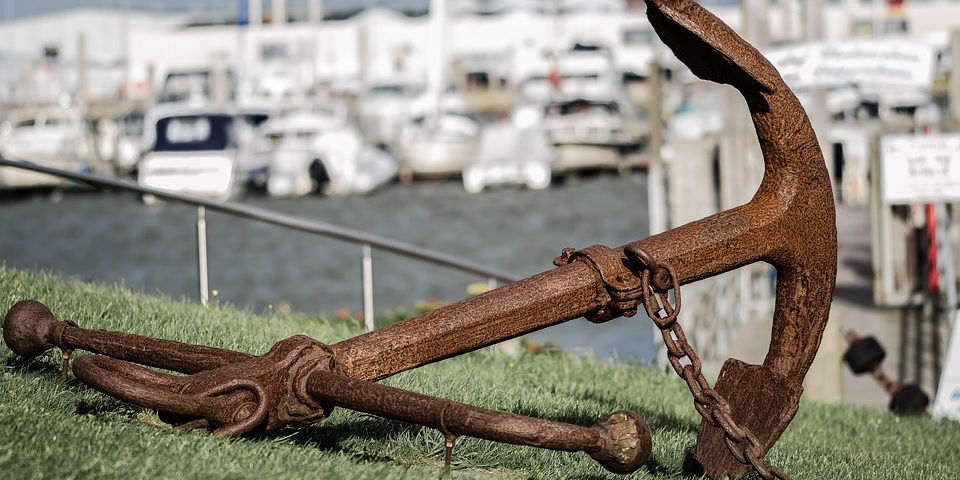
Anchors are fundamental to marine safety, providing the stability required to hold vessels securely in position against wind, tide and current. Whether operating a small leisure craft or managing a large commercial vessel, the reliability of your anchors and associated mooring equipment directly affects safety, efficiency and compliance.
At Atlas Winch & Hoist Services, we understand how critical secure anchoring systems are across marine, offshore and harbour operations. With decades of experience supporting marine projects throughout the UK and overseas, we supply the winching and lifting solutions that ensure vessels remain stable in demanding environments.
The Role of Anchors in Marine Stability
Anchors function by creating resistance against the seabed, preventing unwanted vessel movement. When properly selected and deployed, they provide essential holding power that counteracts environmental forces such as wind loading, wave action and tidal currents.
Marine stability relies not only on the anchor itself but on the integration of the complete anchoring system. This includes the boat anchor winch, winch cable or chain, and supporting winch and pulley arrangements that enable controlled deployment and retrieval. Each element must work together seamlessly to maintain safe positioning.
In commercial settings such as shipyards, quaysides and offshore installations, the importance of anchors extends beyond simple positioning. They support operational continuity, cargo handling, drilling activities and marine construction works, where even minor movement can result in costly delays or safety risks.
Types of Anchors and Their Applications
There is no universal anchor suited to every marine environment. The correct choice depends on vessel size, seabed conditions and operational requirements.
Traditional fluke anchors, often used in leisure boating, are lightweight and effective in sandy or muddy seabeds. Their design allows the flukes to dig into softer ground, creating reliable holding power for smaller vessels.
Plough anchors are favoured for their versatility. Their shape allows them to reset effectively if wind or tide changes direction, making them suitable for varied seabed conditions. These are commonly seen on both leisure boats and mid-sized commercial vessels.
Claw anchors are known for their strong grip in rocky or mixed seabeds. Their curved design allows them to settle quickly and maintain stability even in challenging conditions.
For large commercial vessels and offshore applications, high-holding-power anchors are often specified. These are engineered to maximise resistance while reducing overall weight, making them efficient and effective in heavy-duty marine environments.
In all cases, selecting the right anchor is only part of the equation. The anchor winch system must be capable of handling the required loads safely and efficiently.
Materials and Durability Considerations
Marine environments are inherently corrosive. Saltwater, constant immersion and mechanical wear place significant stress on anchors and associated equipment. Material selection, therefore, plays a critical role in long-term reliability.
Galvanised steel anchors are widely used due to their cost-effectiveness and corrosion resistance. The galvanised coating protects against rust, making them suitable for many standard marine applications. Stainless steel anchors offer enhanced corrosion resistance and are often chosen for aesthetic appeal on leisure vessels. However, in heavy commercial environments, durability and load capacity typically outweigh appearance. For demanding offshore or industrial projects, high-tensile steel anchors provide the strength required to withstand extreme loads. These are often paired with robust winch cable systems and reinforced mooring equipment to ensure complete system integrity.
Regular inspection and maintenance are vital. Anchors, chains and cables must be checked for wear, deformation and corrosion to maintain safe operation.
The Importance of Anchor Winch Systems
Deploying and retrieving anchors manually is impractical for most vessels beyond small leisure craft. This is where the anchor winch becomes indispensable.
An anchor winch provides controlled lowering and lifting of the anchor, ensuring safe and efficient operation. It reduces manual handling risks, increases precision and enables operators to respond quickly to changing marine conditions. In larger marine projects, a boat anchor winch must deliver sufficient torque and pulling power to manage heavy anchors and extended lengths of chain or winch cable. Reliability is critical, particularly in offshore or tidal environments where rapid deployment may be required.
At Atlas Winch & Hoist Services, we supply heavy-duty winching solutions suitable for marine and offshore use. Our experience in shipyard and harbour operations ensures that anchor winch systems are correctly specified to meet operational demands and regulatory standards.
Mooring Equipment and System Integration
Anchors are only one component of a broader mooring equipment system. Cleats, bollards, chains, ropes and fairleads all contribute to secure vessel positioning.
The integration between the anchor, winch and pulley systems must be carefully engineered. A winch and pulley configuration can assist in redirecting loads, improving mechanical advantage and enabling safer handling of heavy anchor assemblies.
In commercial marine operations, particularly those involving barge load-outs or offshore installations, the coordination between mooring equipment and powered winches is essential. Properly designed systems reduce strain on individual components and enhance overall safety.
Atlas has supported numerous marine projects involving heavy-duty winches and power packs, ensuring vessels and floating structures remain stable during complex operations. This depth of experience allows us to advise on complete system solutions rather than isolated components.
Anchors in Leisure Boating
For leisure boating enthusiasts, anchors provide peace of mind during recreational activities. Whether enjoying a calm coastal anchorage or fishing offshore, stability is vital for comfort and safety.
Selecting the correct anchor size and type for the vessel’s displacement is crucial. Undersized anchors may fail to hold in adverse weather, while oversized systems can strain onboard equipment unnecessarily. A reliable boat anchor winch simplifies anchoring procedures, particularly for short-handed crews. It allows for controlled deployment and reduces physical effort, improving onboard safety.
Even in leisure contexts, investing in quality mooring equipment and winch systems enhances reliability and extends service life.
Anchors in Commercial Shipping and Offshore Projects
In commercial shipping, anchors play a central role in port operations, waiting zones and emergencies. Large vessels rely on precisely engineered anchor winch systems capable of handling substantial loads.
Offshore installations, including drilling rigs and floating platforms, require sophisticated anchoring arrangements. Stability is critical to ensure safe drilling operations and prevent structural stress.
In these environments, heavy-duty winch systems must operate flawlessly. Anchor deployment may involve complex winch and pulley configurations to manage extreme loads safely.
Atlas Winch & Hoist Services has extensive experience supporting offshore and marine industries with robust winching equipment designed for reliability in challenging conditions. Our understanding of regulatory compliance ensures that systems meet industry standards while delivering operational efficiency.
Selection Criteria for Anchors and Winching Equipment
Choosing the right anchoring system requires careful evaluation of several factors.
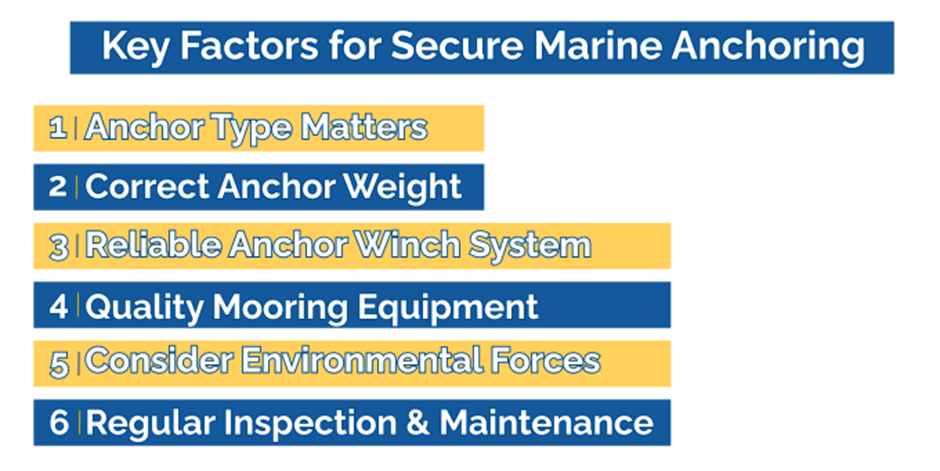
Seabed composition significantly influences anchor performance. Sand, mud, gravel and rock each demand different anchor designs for optimal holding power. Vessel size and displacement determine the required anchor weight and winch capacity. Underestimating load requirements can compromise safety. Environmental conditions, including tidal range, current speed and wind exposure, must also be considered. Areas with strong tidal flows require higher holding power and dependable anchor winch systems. Finally, operational frequency plays a role. Vessels that anchor regularly require durable equipment capable of repeated deployment cycles without excessive wear.
At Atlas, we work closely with clients to assess these factors and recommend suitable winching and lifting solutions that align with project demands and budget considerations.
Maintenance and Compliance
Marine safety regulations require anchoring systems to be properly maintained and fit for purpose. Routine inspection of anchors, winch cable assemblies and mooring equipment helps prevent failures.
Winches should be serviced in accordance with manufacturer guidelines and industry standards. Load testing and certification may be required, particularly in commercial and offshore applications.
Our team of skilled engineers provides servicing, repair and testing support to ensure equipment remains compliant and operational. Attention to detail is central to our approach, reflecting our commitment to delivering reliable, fully insured solutions.
Stability Begins with the Right System
Anchors are far more than simple metal fixtures dropped into the seabed. They are critical components of comprehensive marine stability systems that safeguard vessels, crews and operations.
From leisure boating to offshore engineering, the integration of the correct anchor, anchor winch, winch and pulley configuration and supporting mooring equipment determines performance and safety.
At Atlas Winch & Hoist Services, we specialise in providing robust winching and lifting solutions for marine and offshore environments across the UK and beyond. If you require expert advice on anchoring systems, heavy-duty winches or complete mooring setups, contact our team today to discuss your project requirements. We are here to ensure your marine operations remain secure, compliant and efficient.